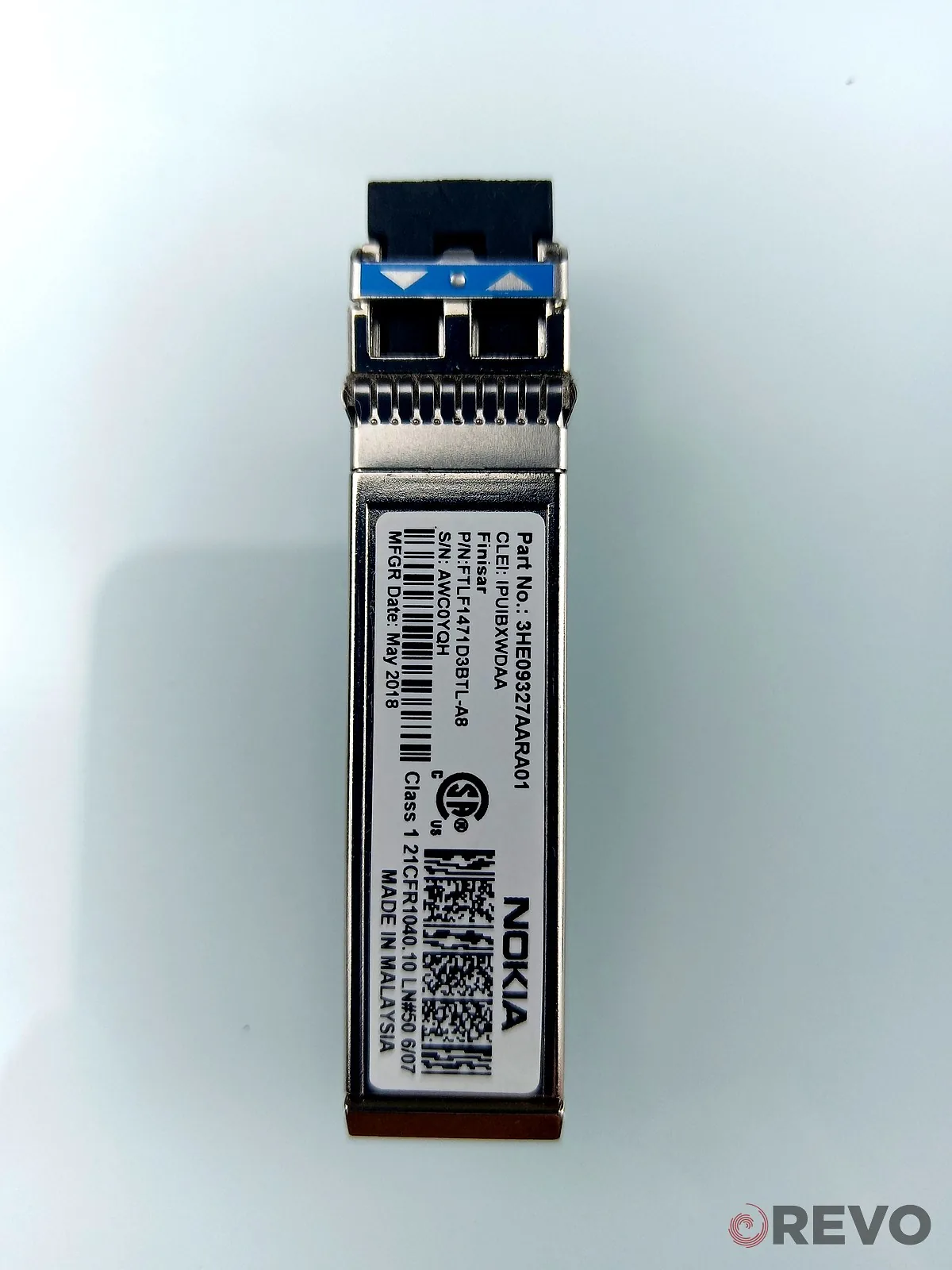
About This Part
The Nokia 3HE09327AA represents a critical component within Nokia's portfolio of high-performance IP routing solutions, typically functioning as a line card or interface module. This part is engineered to integrate seamlessly into carrier-grade chassis-based systems, such as the Nokia Service Router (SR) series, providing robust data plane capabilities. Its primary function involves delivering high-density, high-speed connectivity, often supporting 100 Gigabit Ethernet (100GE) interfaces. Designed for demanding network environments, it facilitates the aggregation, forwarding, and processing of vast volumes of network traffic with low latency and high throughput. Key technical specifications for modules like the Part Number 3HE09327AA typically include support for various optical transceivers (e.g., QSFP28 for 100GE), advanced packet processing engines, and adherence to industry-standard protocols for IP/MPLS routing, ensuring interoperability and scalability within complex network architectures. Its form factor is optimized for efficient power consumption and thermal management within densely populated equipment racks. This Nokia line card is predominantly deployed in core, aggregation, and edge router platforms within large-scale telecommunications networks, internet service provider (ISP) infrastructures, and enterprise data centers. It supports critical network functions such as backbone connectivity, peering points, and data center interconnect (DCI) links. Operators across the globe, including Tier-1 carriers and hyperscale cloud providers, leverage components like the 3HE09327AA to build resilient and high-capacity networks capable of handling exponential growth in data traffic, driven by broadband services, 5G deployments, and cloud computing. It solves the challenge of scaling network capacity and performance while maintaining operational efficiency, often replacing older, lower-density interface modules or enabling upgrades to support next-generation services requiring higher bandwidth and advanced traffic management features. Its robust design ensures continuous operation in mission-critical environments. Revo Distribution Limited specializes in providing B2B clients with cost-effective, used, and refurbished telecom and data centre equipment, including units of the Nokia 3HE09327AA. For businesses seeking to expand or upgrade their network infrastructure without the substantial capital expenditure associated with new hardware, Revo offers a sustainable and economical alternative. Our inventory of high-quality, pre-owned components enables telecom operators, ISPs, and data centre providers to efficiently enhance their network capabilities, extend the operational lifespan of existing platforms, and maintain service continuity. By sourcing and rigorously testing equipment like this Nokia line card, Revo helps clients achieve significant cost savings while upholding performance standards. This approach not provides immediate financial benefits but also contributes to a more circular economy by extending the lifecycle of valuable network assets, reducing electronic waste, and supporting sustainable infrastructure development.