About This Part
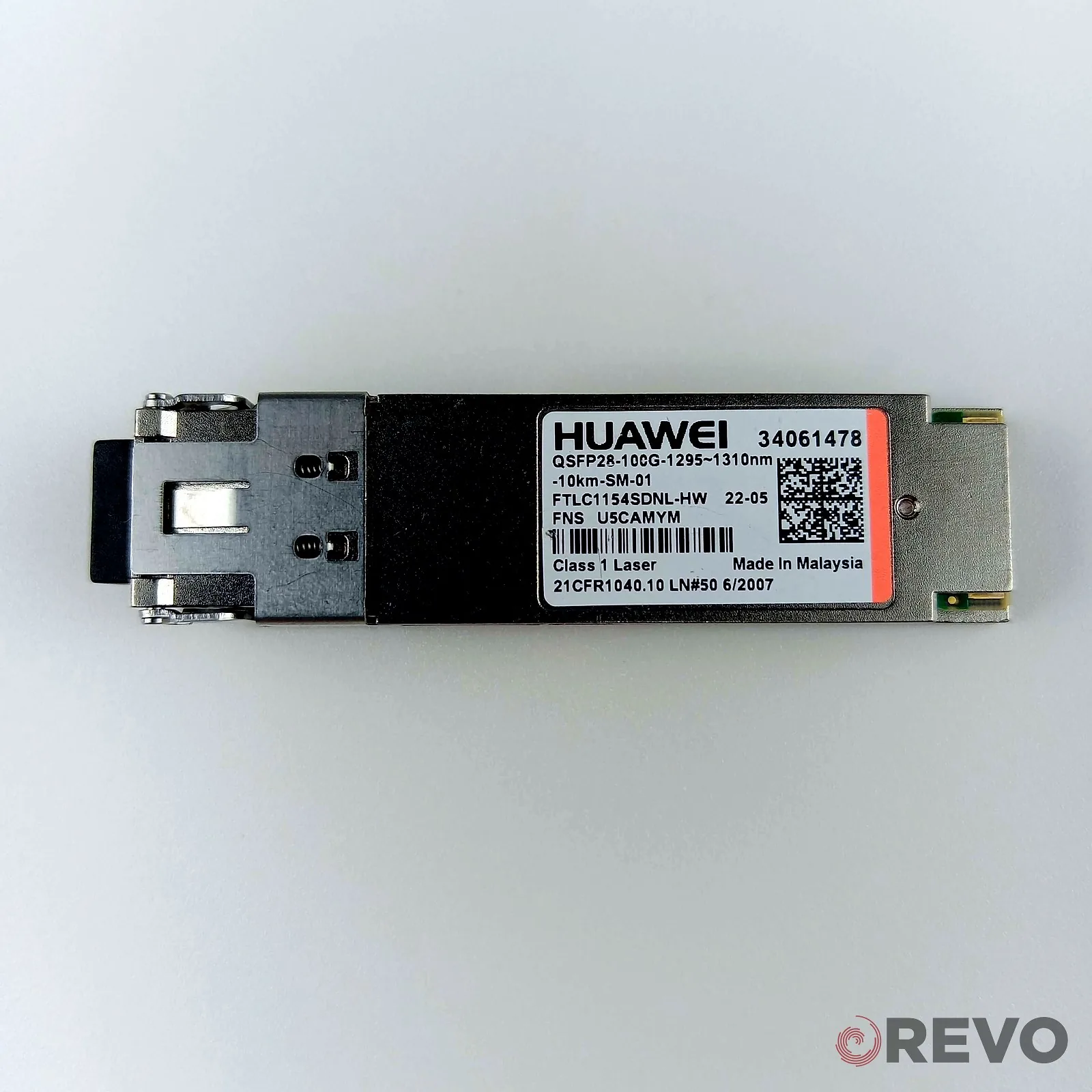
The Huawei 34061478 is a high-performance QSFP28 optical transceiver designed for 100 Gigabit Ethernet applications. This module operates as a 100GBASE-LR4 compliant device, facilitating long-reach data transmission over single-mode fiber. Adhering to the QSFP28 (Quad Small Form-Factor Pluggable 28) form factor, it integrates four independent 25 Gbps transmit and receive channels, aggregating to a total bandwidth of 100 Gbps. The transceiver utilizes a 1310nm wavelength range, employing four distinct wavelengths multiplexed onto a single fiber pair for a robust and efficient connection. Engineered for distances up to 10 kilometers, this Huawei module provides essential connectivity for data center interconnects, enterprise networks, and service provider backbones, ensuring reliable and high-density optical links. Its technical specifications align with industry standards for 100G optical networking, making it a versatile component for modern high-speed infrastructure. Deployment of the Huawei 34061478 QSFP28 transceiver is critical in environments demanding high-bandwidth, long-distance optical interconnects. It is typically installed in core and aggregation layer switches, routers, and network interface cards within data centers, enterprise campuses, and telecommunications central offices. This transceiver supports a wide array of network platforms from leading manufacturers, enabling seamless integration into existing infrastructure for 100 Gigabit Ethernet uplinks and cross-connects. Telecom operators leverage this module for metro and regional network segments, while cloud service providers utilize it for inter-data center links and spine-leaf architectures. The Part Number 34061478 solves the challenge of extending high-speed connectivity over significant distances without compromising performance, effectively replacing multiple lower-speed links or direct attach copper solutions where fiber optic reach is essential. Its adoption facilitates the upgrade of network backbones from 40G to 100G, supporting the escalating demands for data throughput and low latency across various industries. For B2B clients seeking cost-effective infrastructure solutions, Revo Distribution Limited offers used and refurbished units of the Huawei 34061478 QSFP28 transceiver. Our extensive inventory allows telecom operators, data centre providers, and large enterprises to acquire high-quality, fully tested networking components at a fraction of the cost of new equipment. Revo Distribution Limited specializes in providing reliable, sustainable alternatives for expanding or upgrading existing network infrastructure without significant capital expenditure. By supplying refurbished Huawei modules like this 100G QSFP28, Revo enables clients to extend the operational lifecycle of their current systems, deferring costly full-scale replacements while maintaining peak performance. Each unit undergoes rigorous testing to ensure it meets original specifications, providing the same high level of reliability expected from new hardware. This approach not only supports budgetary constraints but also promotes environmental sustainability by reducing electronic waste and maximizing resource utilization within the global telecom and data centre ecosystem.